
materials ·
What's inside the cabinet: how the core board shapes a kitchen
Plywood, MDF and particle board behave differently around water, screws and weight. Here's what to ask about the part of a cabinet you never see.
Think Woodspace studio
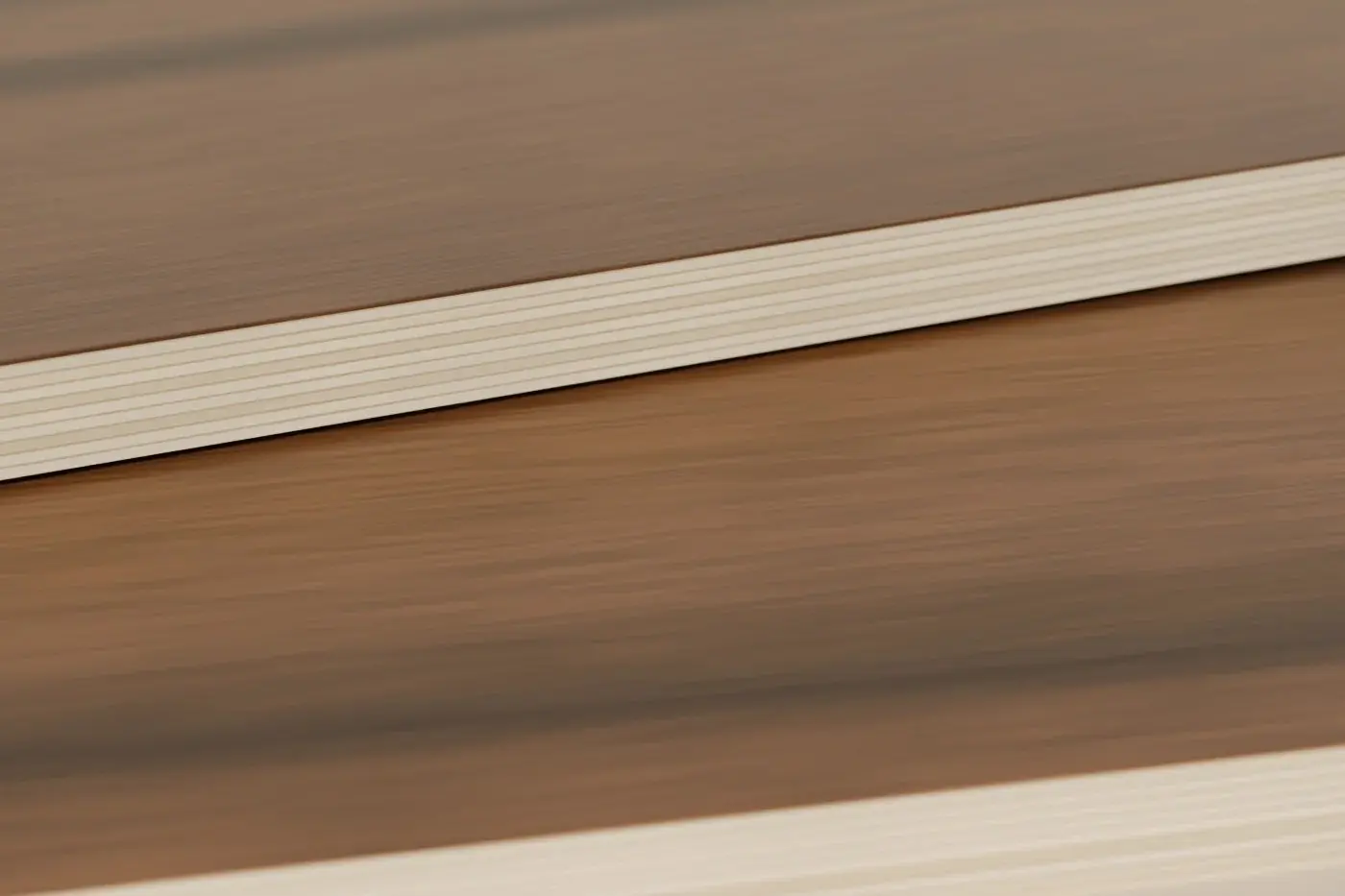
Most conversations about a kitchen start with the shutters — the colour, the finish, the handles. But the box behind each door does most of the work, and it's the part you can't change later without starting again.
Three common core boards
Plywood is built from thin layers of wood glued in alternating directions. It holds screws well and, in water-resistant grades, copes better with spills and steam.
MDF is a dense, smooth board made from fine fibres. It paints beautifully, which is why it's common for shutters, but it needs protection from water at every edge.
Particle board is lighter and cheaper, made from larger chips. It suits dry areas and flat-pack furniture, but it's the most sensitive to moisture and repeated screwing.
Questions worth asking
- Which board is used for the carcass, and which for the shutters?
- What happens under the sink, where leaks are most likely?
- How are exposed edges sealed?
- Can hinges be re-adjusted and replaced without damaging the board?
Why it matters
A beautiful shutter on a weak box will sag, swell or loosen. Asking about the core is the quickest way to understand how a kitchen will age.
Related services: Kitchens, Wardrobes & walk-ins
More from the journal
care ·
Looking after lacquer, veneer and laminate
Simple, finish-by-finish care that keeps joinery looking right for years — and the few things to avoid.
planning ·
Before the first meeting: what to measure and gather
A short checklist for the start of any interior project — what helps a designer understand your space, and what can wait.